Treat your moles together — Mole removal (flat-rate plan for up to 10)
What is mole removal?
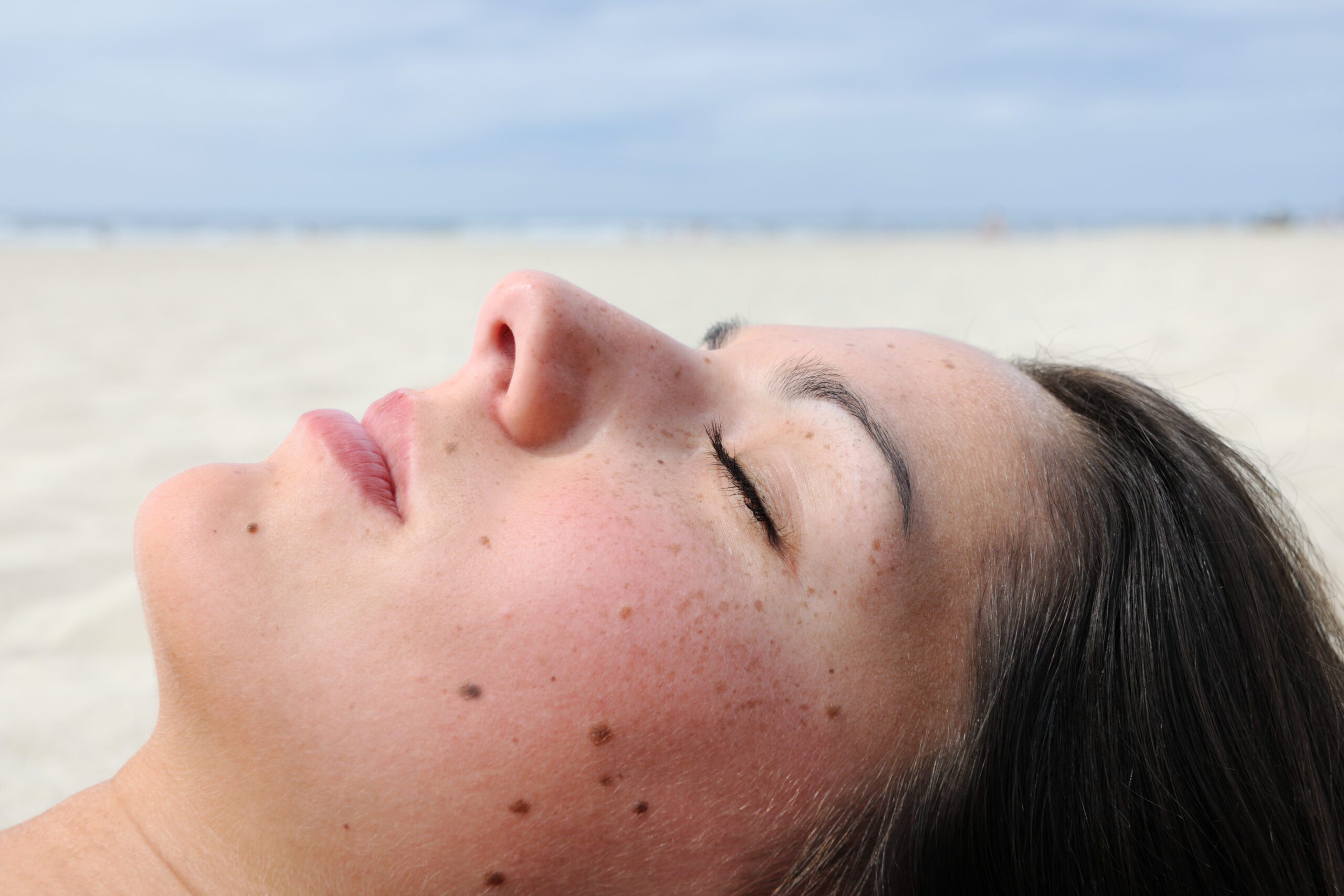
Moles in noticeable areas of the face or body can affect facial expression and the finish of makeup. Some moles tend to become more prominent with age, and an increasing number of patients seek removal to ease this concern.
At our clinic, after a physician’s examination, we apply local anesthesia and then use an electric scalpel to remove the mole via the electrosurgical (electrocautery) method. The procedure is short, with reduced downtime.
For those with multiple moles of concern, we also offer a “flat-rate plan for up to 10 moles.”
Mole removal by electrosurgery (electrocautery method)
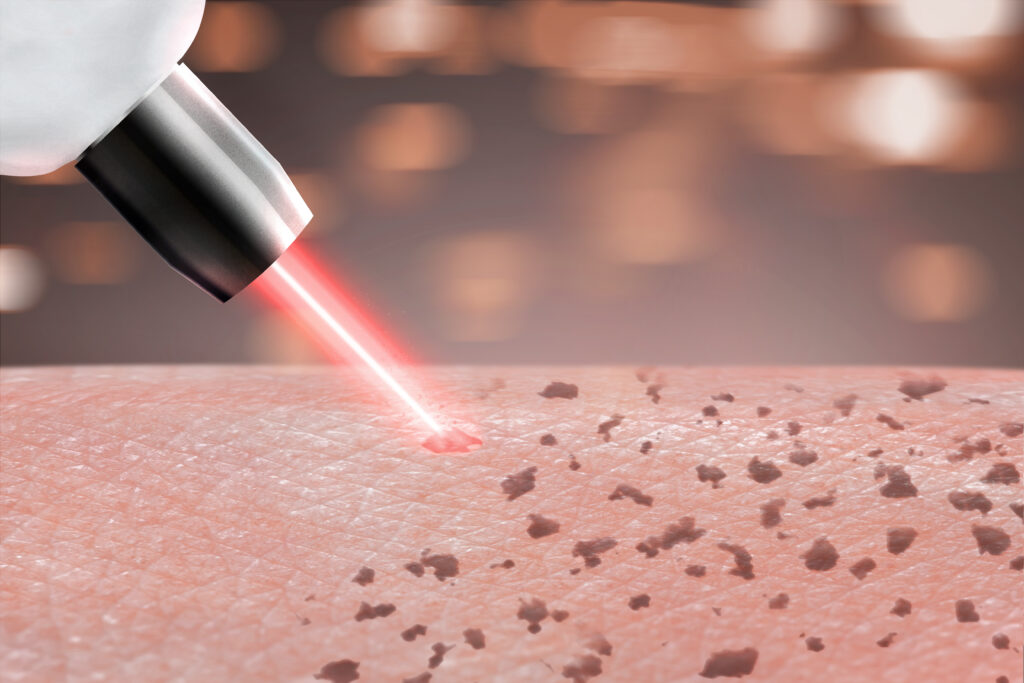
The electrosurgical method uses a high-frequency electric scalpel to vaporize the mole tissue. Local anesthesia is applied to keep pain during the procedure to a minimum. After treatment, a small depression and a scab form, and the scab naturally falls off in about 1–2 weeks. This method is suited to relatively small or raised moles.
WORRIES — Recommended for

・Those concerned about moles on the face or body
・Those who want to remove multiple moles together
・Those whose raised moles catch on clothing
・Those with moles that makeup cannot conceal
・Those looking for a treatment with minimal downtime
・Those who want to confirm the type of mole and the possibility of malignancy
FEATURE
Pre-treatment physician examination
Some moles may rarely be suspected of malignancy. At our clinic, the physician examines the mole before treatment and assesses whether it appears benign based on shape, color, and size. If malignancy is suspected, we refer you to a specialist medical institution such as a dermatology or plastic surgery clinic.
Treat together with the flat-rate plan for up to 10 moles
Our clinic offers a flat-rate plan that can remove up to 10 moles in a single session. Even if you have several moles, you can treat them together in a single visit. Please refer to the pricing page for details.
Pain-conscious treatment
Local anesthesia is applied before treatment to keep pain during the procedure to a minimum. You may feel a sting when the anesthetic injection is given, but the rest of the procedure is performed with little sensation.
Relatively short downtime
With the electrosurgical method, the scab formed after treatment naturally falls off in about 1–2 weeks, allowing a relatively quick return to daily life. Post-treatment pigmentation gradually improves over several months.
Treatment recommendations based on mole size
For moles larger than 5 mm, or those that extend deeply, the risk of hypertrophic scarring and recurrence increases. In such cases, we may propose changing to surgical excision and suturing. We recommend the most appropriate treatment for each individual mole.
Important notes (risks, side effects, downtime)
| Treatment time | About 15–30 minutes (varies by size and number of moles) |
|---|---|
| Pain | Local anesthesia is used, so pain during the procedure is minimal. You may feel a sting from the anesthetic injection. Mild stinging may persist for a few days after treatment. |
| Downtime | A small depression and scab form after treatment and naturally fall off in about 1–2 weeks. Once the scab comes off, pink, thin skin appears and gradually returns to a natural skin tone over several weeks to months. |
| Makeup | Avoid makeup on the treated area on the day of treatment; makeup elsewhere is allowed from the next day. Makeup on the treated area is allowed only after the scab has completely come off. |
| Precautions | For about one week after treatment, please avoid sauna and vigorous exercise. Strict avoidance of direct sunlight and UV protection helps reduce the risk of pigmentation. |
| Side effects | Possible side effects include redness, swelling, scab formation, pigmentation, hypopigmentation (white spots), scarring, hypertrophic scarring, keloids, infection, and recurrence. These risks tend to be higher for moles larger than 5 mm or deeper moles. |
| Possibility of recurrence | Because the electrosurgical method is a surface-level procedure, deeper nevus cells may remain and lead to recurrence. If recurrence occurs, repeat treatment will be necessary. |
*The above is the typical course; pain, downtime, and effects vary by individual.
*Treatment time does not include consultation.
*Pregnant patients are asked to refrain from treatment.
*If the examination suggests possible malignancy, we will refer you to a specialist medical institution such as a dermatology or plastic surgery clinic.
*Our clinic does not perform pathology testing (needle biopsy).
FLOW — Treatment process
We confirm the location, size, and shape of the moles you are concerned about, and the physician assesses whether each mole appears benign or malignant. If a mole appears benign, we propose a treatment plan. If malignancy is suspected, we refer you to a specialist medical institution such as a dermatology or plastic surgery clinic.


We administer local anesthesia around the mole. You may feel a sting from the anesthetic injection, but the rest of the procedure is performed with reduced pain.
An electric scalpel is used to vaporize the mole tissue with the electrosurgical method. A small depression and a scab form on the treated area; please do not touch them until they fall off naturally.


Until the scab falls off naturally, please protect the area without touching it. Strict UV protection helps reduce the risk of pigmentation. We will conduct follow-up examinations as needed.
Physician’s comment
About mole removal
The electrosurgical method we use is suited to relatively small or raised moles. The procedure is short and downtime is comparatively brief, making it manageable for busy patients. Our flat-rate plan that treats up to 10 moles together has been particularly well received by patients with multiple moles of concern.
However, in rare cases moles may include malignant lesions such as melanoma. Moles with the following features—asymmetry, unclear borders, color variation, large size (6 mm or more), or rapid change—must be examined by a physician. At our clinic, a physician examines moles before treatment and refers patients to a specialist medical institution such as a dermatology or plastic surgery clinic if malignancy is suspected. Note that our clinic does not perform pathology testing (needle biopsy).
Also, because the electrosurgical method is a surface-level procedure, deeper nevus cells may remain and lead to recurrence. For complete removal, surgical excision and suturing may be an option. We will discuss the optimal treatment for each individual mole during consultation.
If you have any moles of concern, please feel free to consult us first.
Together Menu — Recommended combinations
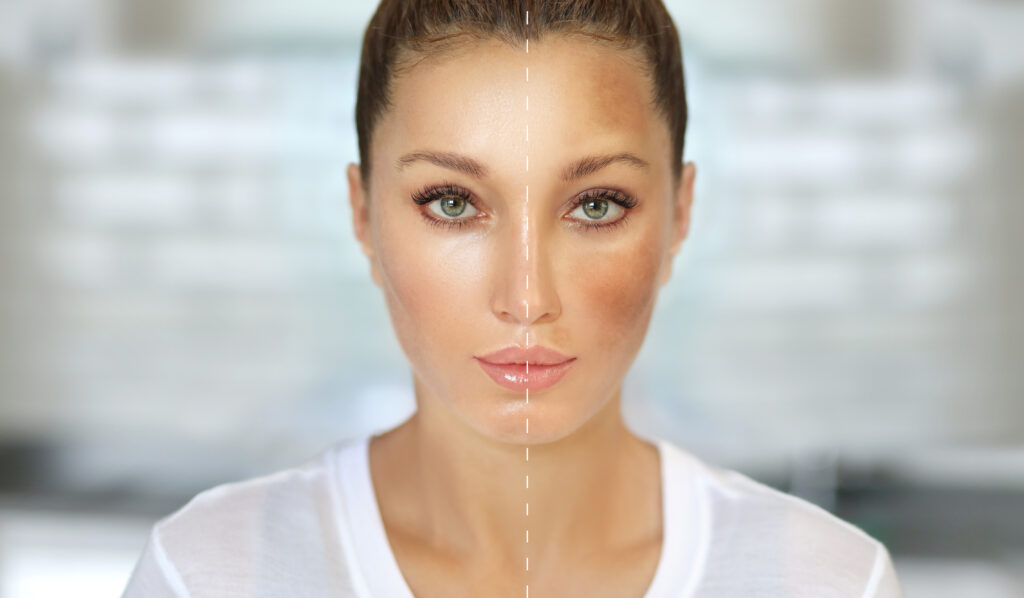
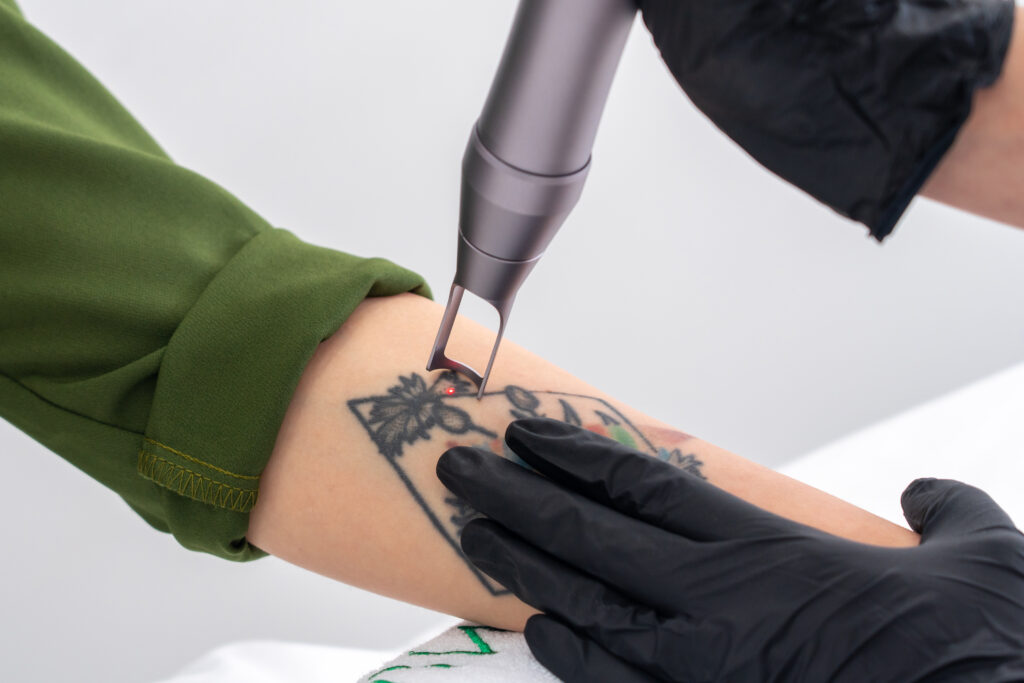
As overall skin care after mole removal, we recommend combination with pico laser pigmentation removal or pico toning for brightening. They can help refine the overall impression of your face.
Q&A (Frequently Asked Questions)
- What is the flat-rate plan for up to 10 moles?
-
It is a plan that allows you to remove up to 10 moles of concern at a flat rate. It is a cost-efficient option for those with multiple moles. Please refer to the pricing page for details. Note that for moles larger than 5 mm or those that extend deeply, we may propose changing to surgical excision and suturing separately.
- Does the mole removal procedure hurt?
-
Local anesthesia is applied before the procedure, so pain during treatment is minimal. You may feel a sting when the anesthetic injection is given, but the rest of the procedure is performed with little sensation.
- How much will the mark remain after treatment?
-
After the scab comes off, faintly pink skin appears and gradually returns to a natural skin tone over several weeks to months. To minimize visible scarring, thorough UV protection after treatment is important. Depending on the size and depth of the mole, a slight depression or pigment change may remain.
- Can you check whether a mole is malignant?
-
A physician examines moles before treatment and assesses benign vs. malignant based on shape, color, size, and any changes. If malignancy is suspected, we refer you to a specialist medical institution such as a dermatology or plastic surgery clinic. Note that our clinic does not perform pathology testing (needle biopsy), so if a definitive diagnosis is needed, we will refer you to a specialist medical institution. If you have any moles with concerning changes, please consult us first.
- How should I care for the area after treatment?
-
Until the scab falls off naturally, please do not pick at it. Keep the area clean to prevent infection, and use ointment and protective tape as instructed by the physician. After the scab comes off, particularly thorough UV protection helps prevent pigmentation.
- Once a mole is removed, can it come back?
-
Because the electrosurgical method is a surface-level procedure, deeper nevus cells may remain and lead to recurrence. If recurrence occurs, repeat treatment is possible. For complete removal, surgical excision and suturing may be an option, so please discuss during consultation.
- Can large moles also be removed?
-
For moles larger than 5 mm or deep moles, the electrosurgical method has an increased risk of hypertrophic scarring and recurrence. In such cases, we may propose changing to surgical excision and suturing. We will discuss the optimal treatment after examination.
- When can I wear makeup or wash my face after mole removal?
-
Makeup on areas other than the treated site is allowed from the next day. Makeup on the treated area is allowed only after the scab has completely come off. Please wash your face gently without applying strong friction to the treated area.
- Can I receive treatment while pregnant?
-
There are no reports of problems with treatment during pregnancy, but to prioritize safety, we ask pregnant and breastfeeding patients to refrain from treatment.
Why patients choose us

I want to have my moles removed, but I’m worried about scars.

At our clinic, the physician examines the condition of each mole in advance and recommends the appropriate treatment based on size and depth. If we determine the electrosurgical method is not suitable, we may propose surgical excision and suturing instead. For those with multiple moles of concern, we also offer a flat-rate plan that treats up to 10 moles together. With treatment tailored to each individual mole, we aim for a finish that is as natural as possible. Please feel free to consult us first.
Self-pay treatment information (details here)
■ About self-pay treatment
This treatment is not covered by Japanese national health insurance and is provided as self-pay treatment. All listed prices are tax-included. Please refer to the “Pricing” page for details.
■ About the plan
The “flat-rate plan for up to 10 moles” allows up to 10 moles of concern to be removed together at a flat rate. If you wish to remove 11 or more moles, please consult us separately. For moles larger than 5 mm or those that extend deeply, we may propose changing to surgical excision and suturing.
■ Main risks & side effects
Redness, swelling, scab formation, pigmentation, hypopigmentation, scarring, hypertrophic scarring, keloids, infection, recurrence, etc. Effects and side effects vary by individual. These risks tend to be higher for moles larger than 5 mm or deeper moles.
■ About malignant lesions
At our clinic, the physician examines moles before treatment and refers patients to a specialist medical institution such as a dermatology or plastic surgery clinic if malignancy is suspected. Note that our clinic does not perform pathology testing (needle biopsy). If a definitive diagnosis is needed, we will refer you to a specialist medical institution. If you have any moles with concerning changes, please be sure to consult us in advance.
■ Those who cannot receive treatment
Pregnant or breastfeeding women, those prone to keloids, those with infection or inflammation at the treatment site, those with moles where malignancy is suspected, those with bleeding tendencies, those on anticoagulants, etc.
Mole Removal Pricing
A treatment using the electrolysis method. All prices include tax.
Single Mole Pricing by Size
| Size | Price |
|---|---|
| Under 2mm | JPY 5,500 |
| 2-4mm | JPY 8,800 |
| 4-6mm | JPY 13,200 |
| 6mm or larger | JPY 16,500 |
Full-face Unlimited Plan
| Plan | Price |
|---|---|
| Up to 5 moles | JPY 49,500 |
| Up to 10 moles | JPY 88,000 |
*The unlimited plan covers facial moles that can be removed in a single session.
*If large moles 4mm or larger are included, the per-size pricing may apply. Please discuss details during consultation.
*Depending on depth and condition, two or more sessions may be required, and additional fees may apply.
Inclusions & Options
| Anesthesia (local) | Included |
|---|---|
| Aftercare tape | Included |
| Post-op follow-up | Included |
| Dermatology referral if malignancy is suspected | Free |
*All prices include tax.
*All treatments are self-pay (not covered by Japanese national health insurance).
*If malignancy is suspected in a mole, a referral will be made to a partner dermatology / plastic surgery clinic (insurance may apply at the referral destination).
*Prices are subject to change without notice.
Our Doctors
Supervising Physician / Aesthetic Surgeon
Yuki Takamido, MD
Specialties
Aesthetic surgery / Oculoplastic surgery
Career
2014: Graduated from Mie University School of Medicine
2015: Meitetsu Hospital
2017: Fujita Health University Hospital — Assistant Professor
2020: Founded Flamingo Aesthetic Clinic
2021: Branch director, Shiromoto Clinic Aesthetic Surgery
2021: Co-founded Viviage Clinic (Kokoukai Medical Corporation)
2022: Ace Clinic (Ichibikai Medical Corporation)
2023: Director, Sakae Aesthetic Clinic — Sakae branch
Currently: VIVIAGE ZONNE CLINIC (Kokoukai Medical Corporation)
Areas of expertise
Hyaluronic acid filler, thread lift
Eyelid surgery (lower-eyelid fat removal for dark circles, transcutaneous & transconjunctival Hamra technique, midface lift, double-eyelid surgery, blepharoptosis surgery)
Aesthetic dermatology procedures
Society memberships
Japanese Society of Oculoplastic and Reconstructive Surgery
Japan Society of Aesthetic Plastic Surgery
Japanese Society of Aesthetic Dermatology
Japanese Society of Anti-Aging Medicine
Days available
Wednesday, Friday (10:00–17:30)
Occasional Saturdays (dates vary; please confirm by phone or LINE)

Director
Minoru Horisawa, MD
Book a Consultation / Contact Us
If you have any concerns, please feel free to reach out.
Our consultation, including the doctor’s examination, is available free of charge.
Hours: Mon, Tue, Wed, Fri, Sat 10:00–17:30 (Closed Thu, Sun)
T.O Building 4F, 3-33-30 Sakae, Naka-ku, Nagoya — about a 4-minute walk from Yabacho Station